In 2020, the Bone Cancer Research Trust launched the UK’s first ever dedicated adamantinoma research programme, thanks to the determination of one inspirational patient, Liz Clarke-Saul.
In 2001, Liz was diagnosed with adamantinoma at the age of 12. She underwent multiple surgeries before having her leg amputated at just 14 years old. In 2018, the disease returned and had spread to her lungs and spine. Liz then made the extraordinary decision to channel her energy into changing the future for other patients facing this rare form of primary bone cancer.
In 2019, she and her husband Jack established The Liz Clarke-Saul Fund, a Special Fund of the Bone Cancer Research Trust, determined to create hope where there had previously been very little research investment. At the time, there were no dedicated adamantinoma research programmes in the UK and no treatment options beyond surgery.
Through the incredible fundraising efforts of Liz, her family, friends and supporters, they quickly raised enough money to fund two pioneering research projects focused on understanding and treating adamantinoma.
The first project investigated signalling proteins linked to adamantinoma relapse and spread, exploring whether biological pathways already identified in other bone cancers could help researchers better understand how adamantinoma behaves. The second focused on identifying new biomarkers that could improve diagnosis, monitoring and future treatment development for patients.
Liz passed away in July 2020, but her vision continued and became the foundation for the UK’s first adamantinoma research programme that continues today.
The latest project, which forms part of the programme, is being led by Professor Judith Bovée at Leiden University in the Netherlands. Awarded £100,000 in 2024, the project brings together international experts to improve understanding of adamantinoma and closely related tumours, with the aim of improving diagnosis, treatment planning and patient outcomes.

Professor Bovée and collaborators are studying one of the largest collections of adamantinoma tumour samples in Europe, using advanced techniques to better distinguish between osteofibrous dysplasia (OFD)(benign), atypical OFD (previously called OFD-like adamantinoma, locally aggressive) and classic adamantinoma (malignant).
One of the main challenges with studying rare cancers is that tumour samples are very difficult to acquire in high numbers. This makes it hard to get a full understanding of adamantinoma, and how it differs from other bone tumours. With this collaborative approach, researchers hope the work will ultimately lead to more accurate diagnoses and personalised treatment approaches for patients.
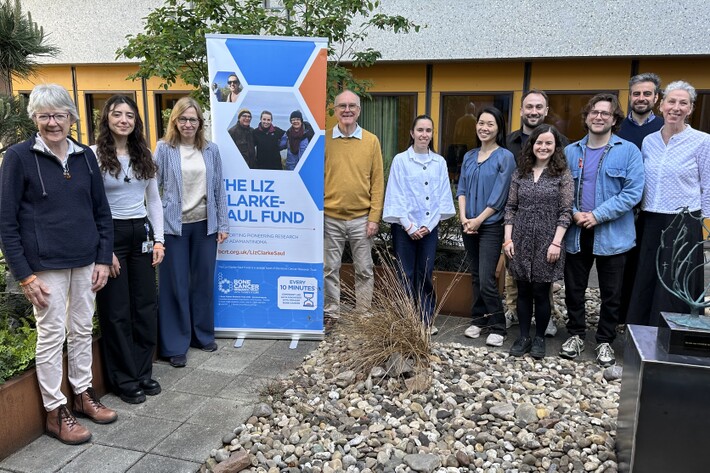
Liz’s husband Jack and her parents, Lesley and Jeremy, had the opportunity to visit the laboratory and see first-hand how adamantinoma research is continuing to progress because of the legacy Liz created.

Liz’s mother, Lesley, said:
It was quite incredible to learn about the cutting-edge technology that is being used to dig deep into the molecular structure of the cells, and very interesting for us to see the different tumour types under the microscope. It meant a great deal to us to see that work is currently taking place in this extremely challenging field… It felt to us that accurate diagnosis is going to be a real possibility in the future - this would be such a positive step for future patients, which is exactly what Liz was hoping for when she set up her Fund.
Will Burchell, Chief Executive Officer at the Bone Cancer Research Trust, added:
Five years on from the launch of the UK’s first adamantinoma research programme, the determination shown by Liz continues to shape the future of research into this rare disease. From the first biomarker and signalling studies to pioneering collaborations, her legacy is helping to build a future with better understanding, better diagnosis and ultimately better outcomes for patients with adamantinoma, something for which future patients and families will be deeply grateful.
To read more about Liz’s story and the Liz Clarke-Saul Fund, please visit The Liz Clarke-Saul Fund
Laboratory visit in the Netherlands

